
How to bid a contracting job
Go to the site visit to find the problem the customer is solving, not to measure. Use a rough ballpark to find their budget, then price the solution as a base for what the job needs plus options for what they choose. Save every number you phone around for, plan the pour and the cleanup, and review the estimate with them before you leave.
Step 1
Go to find the problem, not to measure a slab
On a site visit you are not there to price what they asked for. You are there to find out what problem they are trying to solve, because the job they ask for is often not the problem they have.
Take a real one. The call was for a driveway and a path. On the visit: her husband has had back surgeries and can't easily get out of the house. She runs a business from home, and on a busy day the clients and the family vehicles end up on the lawn because the small asphalt pad isn't big enough. The real problem isn't a driveway. It's access: room for everyone to park, and a safe way out of the house for him.
Once you know that, every decision after it has something to check against.
What to say“Walk me through a busy day here. Where does everyone park, and how does everyone get to the car?”
Step 2
Find the budget with a rough ballpark
Ask what they are looking to spend. Most people don't know, and that's fine. Give them a rough number on the spot, based on what you see, and say plainly that it's only a rough idea.
Their reaction tells you more than the question did. They'll tell you it's too much or that it's about what they expected, and now you know where to dig.
What to say“Just so you have a rough idea, a job like this usually lands somewhere around this. Is that in the range you were thinking?”
Step 3
Too much? Ask, then educate
If the ballpark is too much, ask what they were hoping to spend on the project. Then help them see what that number can do. Sometimes it means this isn't the right solution and a different one is. Sometimes it means the same solution with less in it.
In the access example, that could be widening the parking and pouring the level path to the door now, and leaving the rest of the driveway for later. The problem still gets solved first.
What to say“For that budget, the full driveway isn't the answer, but this would get everyone parked and get him safely to the car.”
Step 4
Split the price: the base, and the options
Some things are fixed by the job. A driveway will have vehicles on it, so it needs a compacted base, a vapour barrier, reinforcement, a minimum thickness and, often, some drainage. Every slab has them. That's the base price, and it doesn't move.
Then there are the things they choose, like the finish, the colour or the borders. Those are the options, and that's where the customer makes decisions. Each option is its own small scope: what it is, what's included and what has to be done to deliver it.
- ✓ Base: compacted base, vapour barrier, reinforcing steel, minimum thickness, drainage where it's needed
- ✓ Options: broom, exposed aggregate or stamped finish; colour; borders; extra area
Step 5
Do the takeoff, and save every number
You can't price the base and the options without measuring and doing a takeoff. Early on, you haven't done enough of these jobs to know the price from memory, so you have to make the calls: suppliers for the materials, the pump company, the disposal site. It takes time. That's normal at the start.
But save every number you get, with the supplier and the date. Next time, you pick the line instead of phoning around. That's how a site visit that took days to price turns into an estimate you build on your phone in minutes and send before you leave the driveway.
Step 6
Plan how the concrete gets there, and what leaves with it
How the concrete reaches the pour changes the price: straight off the truck, a line pump, a boom pump, or buggies down a path. A pump is a range, not a number, because it depends on who you call and who is free. Ask about booking too: how far ahead they need you to book and whether they have a minimum time.
Then the part that gets forgotten: what happens to the leftover concrete and the washout before the truck or pump leaves. Operators will often wash out on site unless you've told them otherwise. Decide where it goes, and put it on the estimate.
What to say“Leftover concrete and the pump washout leave the site with us.”
Step 7
Review it with them on the spot
Don't just send it and hope. Walk through it with them, right there, while the visit is fresh: what they told you, how you understood it, your plan, what's included and what isn't, the base price, and then each option and what it costs.
If they want time, they take the time. If they have questions, you're standing there. Either way, confirm they've got it in their inbox before you leave.
What to say“This is what we talked about and how I understood it. Here's our plan, what's included and what's not, the base price, and the three options you asked about.”
Step 8
Then lock it in
Keep the price window short, because material prices move. Tie the payments to stages they can see: a deposit to book, a payment at a stage like forms and base inspected, and the balance on completion. And write down how changes work before there are any: anything added after signing is a change order, priced and approved on its own.
If the job needs real design work before you can price it, charge a small planning deposit and credit it to the job. Carver did this when he was contracting. It filters out price shoppers, and the serious customer loses nothing.
What to say“Anything we add after signing goes on a change order, so you approve the price before we do it.”
Build it on your phone, on site
Our free estimate template follows these steps: the problem in their words, the areas with photos, a base price and options, what's included and not, pour day, and a price book that remembers every number. Their copy builds beside your form as you fill it in.
Open the estimate templateBy Nova and Carver Lloyd – Digital Cowboy. Business know-how and AI, working together.
Keep going
More free resources
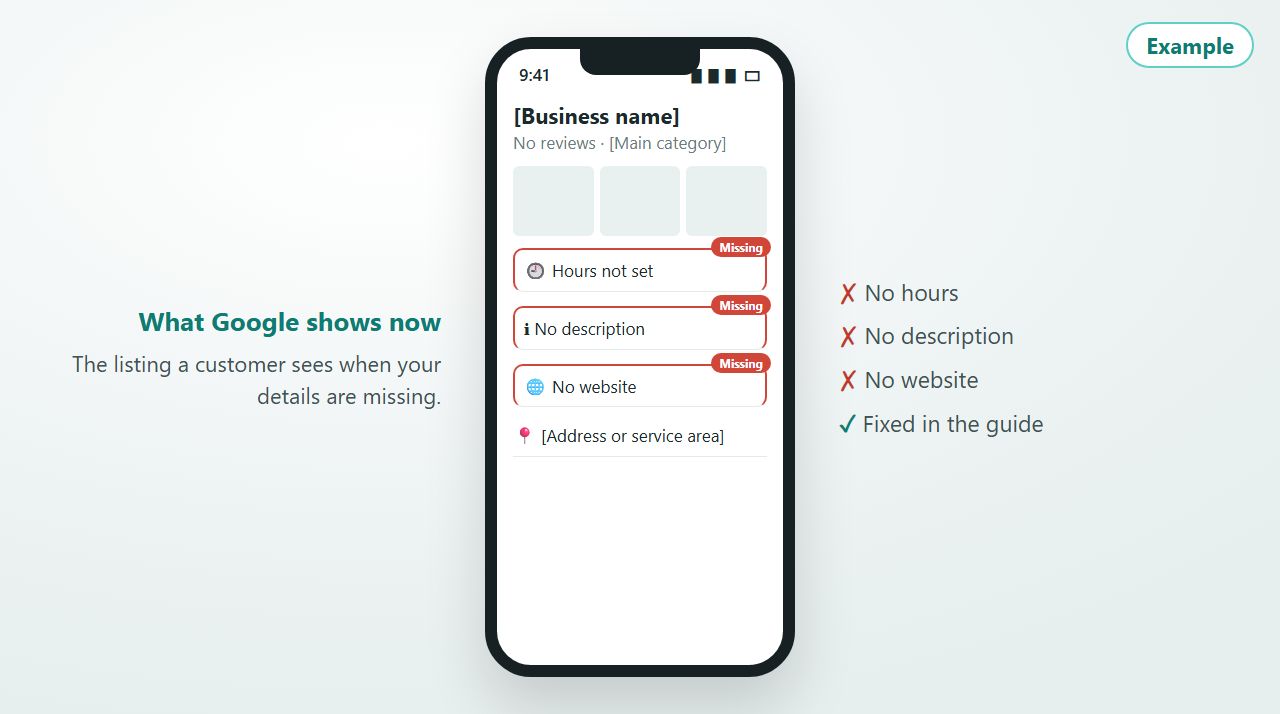
Getting found · 45 min
Why isn't my business showing up on Google?
An interactive guide that takes you through fixing your listing yourself. It starts with the five ways wrong or missing details push you down Google, then walks you through the changes.
Interactive guide
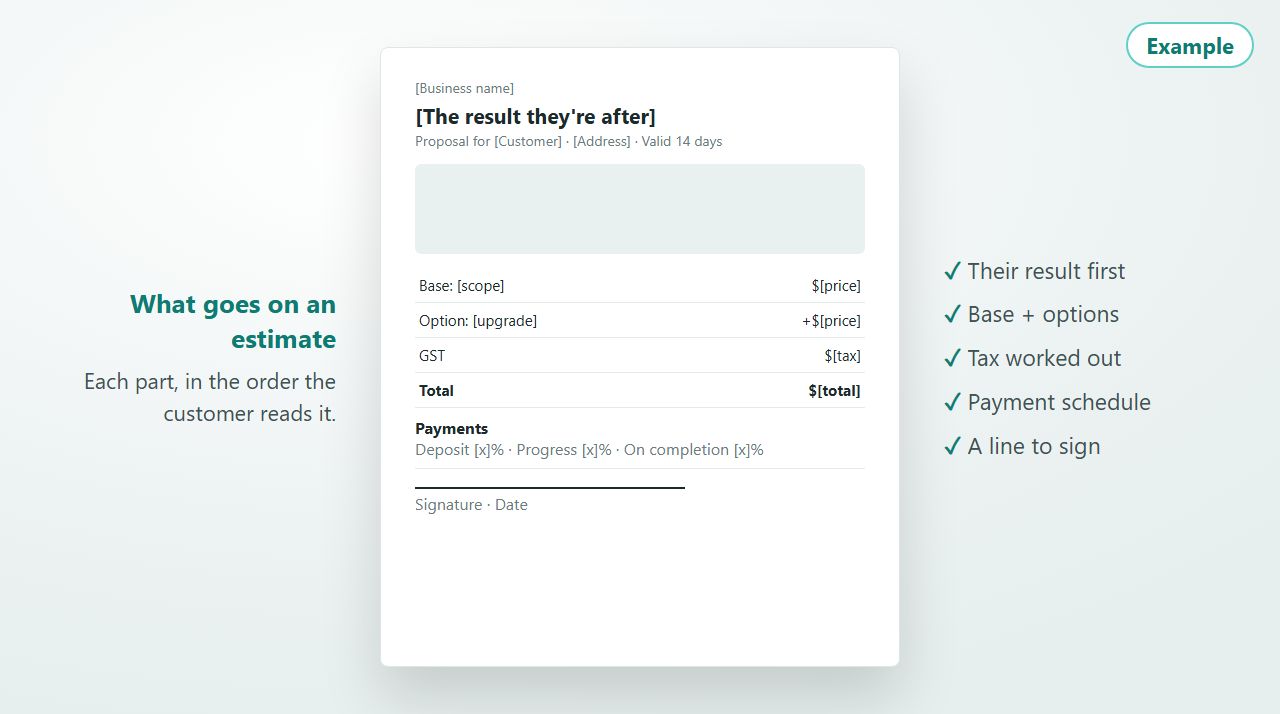
Getting paid · 5 min setup
Free contractor estimate template
What goes on an estimate, section by section, and a free proposal builder for concrete and formwork jobs: site photos, a base price plus options, a price book, saved to your account.
Guide + proposal builder · free account
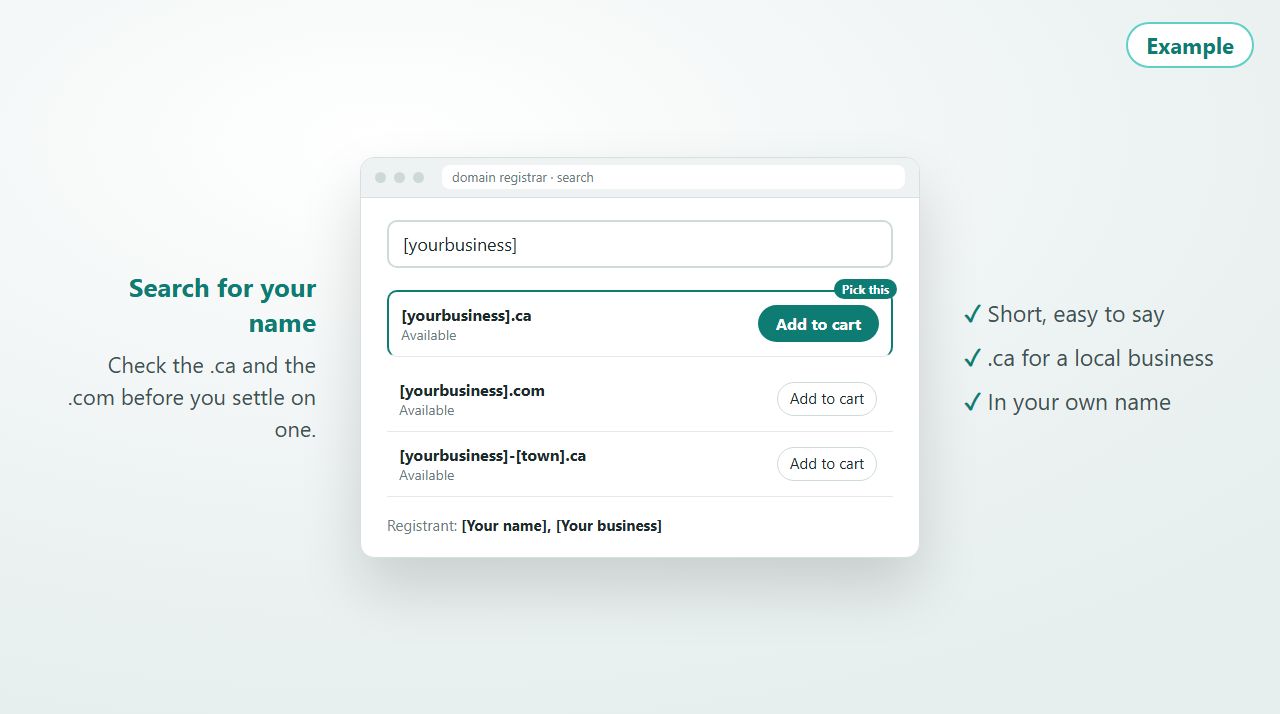
Websites · 8 min read
Buying your domain name
How to pick a domain name for a service business, what to do when the one you want is taken, and how to buy it so it stays in your name.
Guide

Productivity · 15 min setup
One Google Drive on every device
Get your desktop, laptop, phone and tablet working from the same files. A 1-minute video plus a 6-step interactive walkthrough with Windows/Mac and iPhone/Android paths.
Video + interactive walkthrough · free account
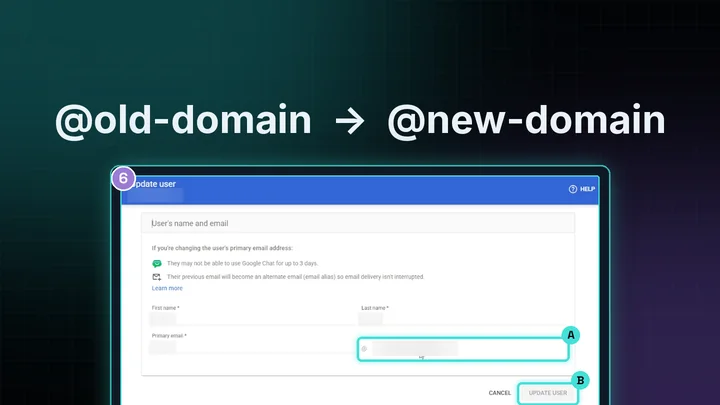
Systems · 6 steps
Switch your Workspace email to a new domain
New business name or domain, but your email still ends in the old one? Add the new domain to Google Workspace and switch your primary email. 6 steps with screenshots, plus a PDF.
Step-by-step guide + PDF · free account
Find out what your website is costing you
Request a free analysis of your site. We go through it ourselves: how fast it loads, whether it grabs attention, and how easy it is to call or book. Then book a free call and we go through it with you.